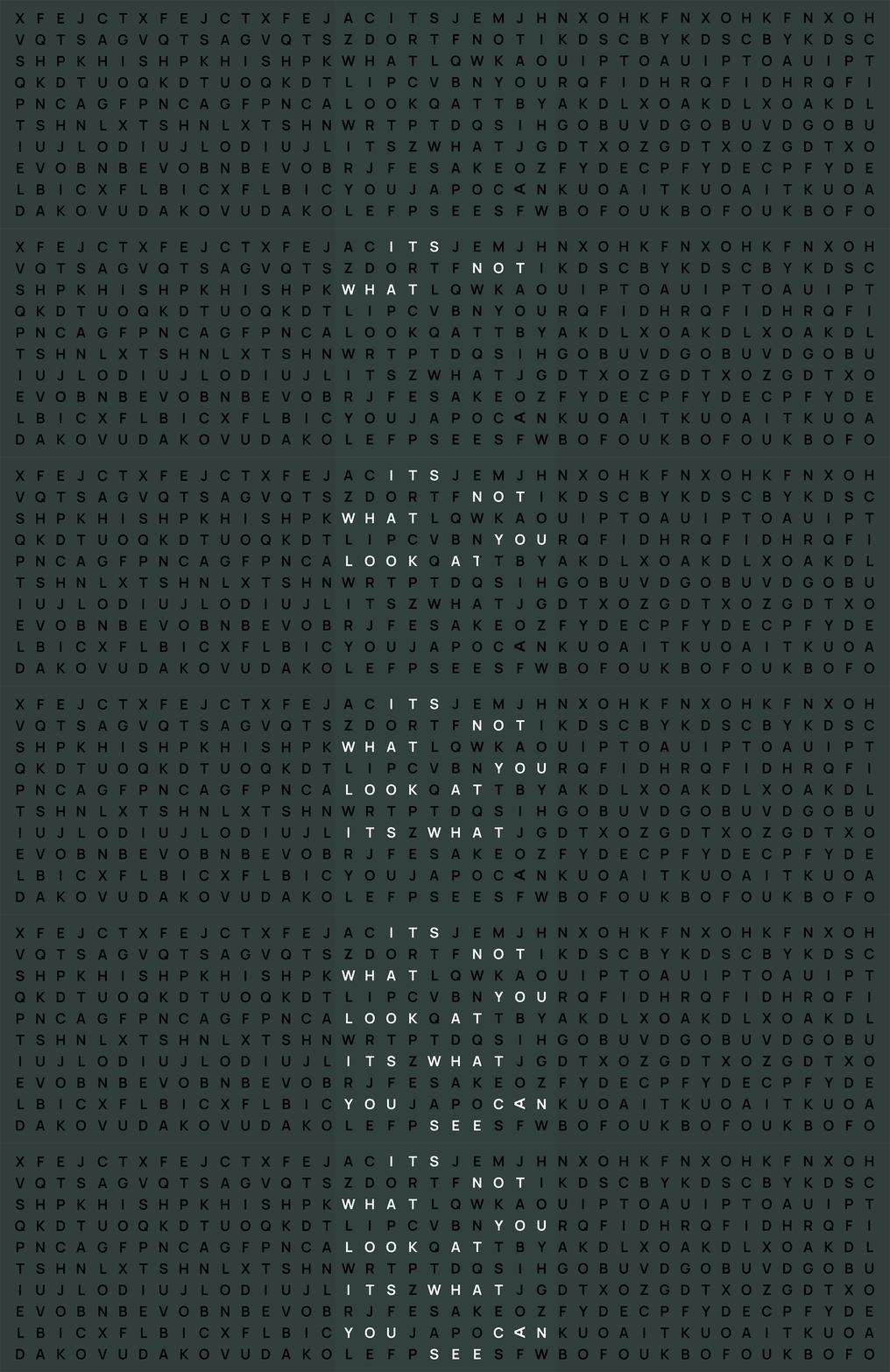
It’s not what you look at, but what you can see

It’s not what you look at, but what you can see

In my view, insight isn’t just about where you look – but what you’re able to perceive. And nowhere is that more relevant than in the evolving field of CFO services.

Something is quietly shifting in this corner of the consulting industry – and it’s not just about margins or market share. It’s about experience. Or rather, the growing recognition that experience isn’t just an asset, it’s the very foundation of value creation.

For decades, the traditional consulting model has resembled a pyramid: at the base, a legion of bright but inexperienced analysts. At the top, a handful of seasoned partners who rarely deliver the work themselves. This model is efficient – at least for the firms – but increasingly, it feels out of step with client expectations.

Today, CFOs and finance departments are asking a different set of questions. Not “which firm should we hire?” but “who will actually be doing the work?”

Because when it comes to bringing in external support to work with valuable data or make changes to the processes and workflows that keep the finance engine running, there is little room for trial and error. Experience – hands-on, field-tested, pattern-recognising experience – is no longer a nice-to-have. It’s a requirement.

The limits of the learning curve


The flaw in the pyramid model isn’t just theoretical. It’s operational. Many consulting engagements are staffed by junior consultants who, though intelligent and enthusiastic, are navigating their own learning curve on the client’s time and budget. They may know what to look for – a risk indicator, a reporting lag, a potential error – but without context, they often miss what really matters.

And here’s what it comes down to: experienced consultants don’t just identify problems. They interpret them. They’ve seen the political dynamics behind delayed transformation efforts. They understand why certain optimisations fail to stick. They can anticipate which metrics will falter.

This isn’t abstract. In high-stakes finance functions, the ability to read the room – to spot patterns beneath the surface – can mean the difference between a costly misstep and a successful strategic shift.

Beyond the big names


This shift in mindset has implications for how clients choose their advisers. The prestige of a big firm matters less than the track record of the individuals in the room. Increasingly, businesses are resisting the allure of polished frameworks and templated playbooks in favour of lived experience and real-world pragmatism.

In a landscape where uncertainty is the only constant – inflationary pressures, geopolitical tensions, digital transformation, regulatory volatility – experience becomes not just a differentiator, but a safeguard. It’s what allows consultants to navigate grey zones, adapt faster, and minimise risk. They don’t just solve problems – they pattern-match.

Experience will be tomorrow’s key parameter


The consequence? A growing number of consulting firms are reshaping their operating models. Flatter hierarchies. Smaller, senior-heavy teams. Delivery led by the people who’ve been there before – not just observed it in theory, but steered it in practice.

It’s a quiet revolution, perhaps. But one with far-reaching consequences for how CFOs engage external support. And for the consulting industry itself, it raises deeper questions: What do we reward – potential or proven insight? And are we willing to let go of a model that prioritises scale over substance?

In the end, the future of CFO consulting may hinge on a simple truth: it’s not about what a consultant looks at, but what they are able to see.

And more importantly – whether they’ve seen it before.

Atlab’s approach


At Atlab, we value experience extremely high. Our consultants bring hands-on expertise and practical leadership gained through real-world challenges.

If you’re curious about how we can support your finance team with insight that truly makes a difference, don’t hesitate to get in touch. We’d love to hear from you.